

November Stress; Feeling More Tense Lately? How Stress Shows Up in Your Body.
Have you noticed your shoulders creeping up towards your ears lately?
More headaches than usual?
A tight jaw… or that familiar knot between your shoulder blades? 😣
You might think it’s your posture.
Or your pillow.
Or just a “busy week”.
But often, it’s stress.
Let’s talk about how mental and emotional stress shows up physically in the body — and what you can do about it. 🌿
Stress Doesn’t Just Live in Your Mind 🚨
When you’re stressed, your body shifts into “fight or flight” mode.
This is helpful in short bursts — but when stress becomes ongoing (work pressure, financial worries, darker evenings, busy schedules), your nervous system can stay switched on for longer than it should.
And that’s when physical symptoms start creeping in.
How Stress Shows Up Physically 🤔
Here are some of the most common patterns we see in practice during the colder, busier months:
👉 1. Neck and shoulder tension
When you’re stressed, muscles around the neck and shoulders tighten automatically.
Over time, this can lead to:
Persistent stiffness
Reduced movement
Tension headaches
👉 2. Headaches and jaw tension
Clenching your jaw — even unconsciously — is a common stress response.
This can trigger:
Headaches
Facial tension
Upper neck discomfort
👉 3. Lower back tightness
Stress can subtly change posture and breathing patterns.
Shallow breathing and prolonged sitting (which often increases during darker months 💻) can contribute to lower back strain.
👉 4. Increased pain sensitivity ⚡
When your nervous system is under stress, it becomes more sensitive.
That means old injuries may flare up more easily, and small aches can feel more intense than usual.
Why November Can Feel Harder 🍂
Shorter days.
Less sunlight.
End-of-year work pressure.
The run-up to Christmas beginning in the background.
All of these can quietly increase stress levels — and your body often absorbs more than you realise.
How to Support Your Body (And Nervous System) 🌿
The good news? You don’t have to just “power through”.
🌱 1. Improve movement
Gentle daily movement helps calm the nervous system and reduce muscle tension — even a short walk in daylight can make a difference.
🌱 2. Check your posture
When stress rises, posture often collapses.
Being mindful of how you sit, stand, and breathe can reduce unnecessary strain on the spine and shoulders.
🌱 3. Restore healthy spinal movement
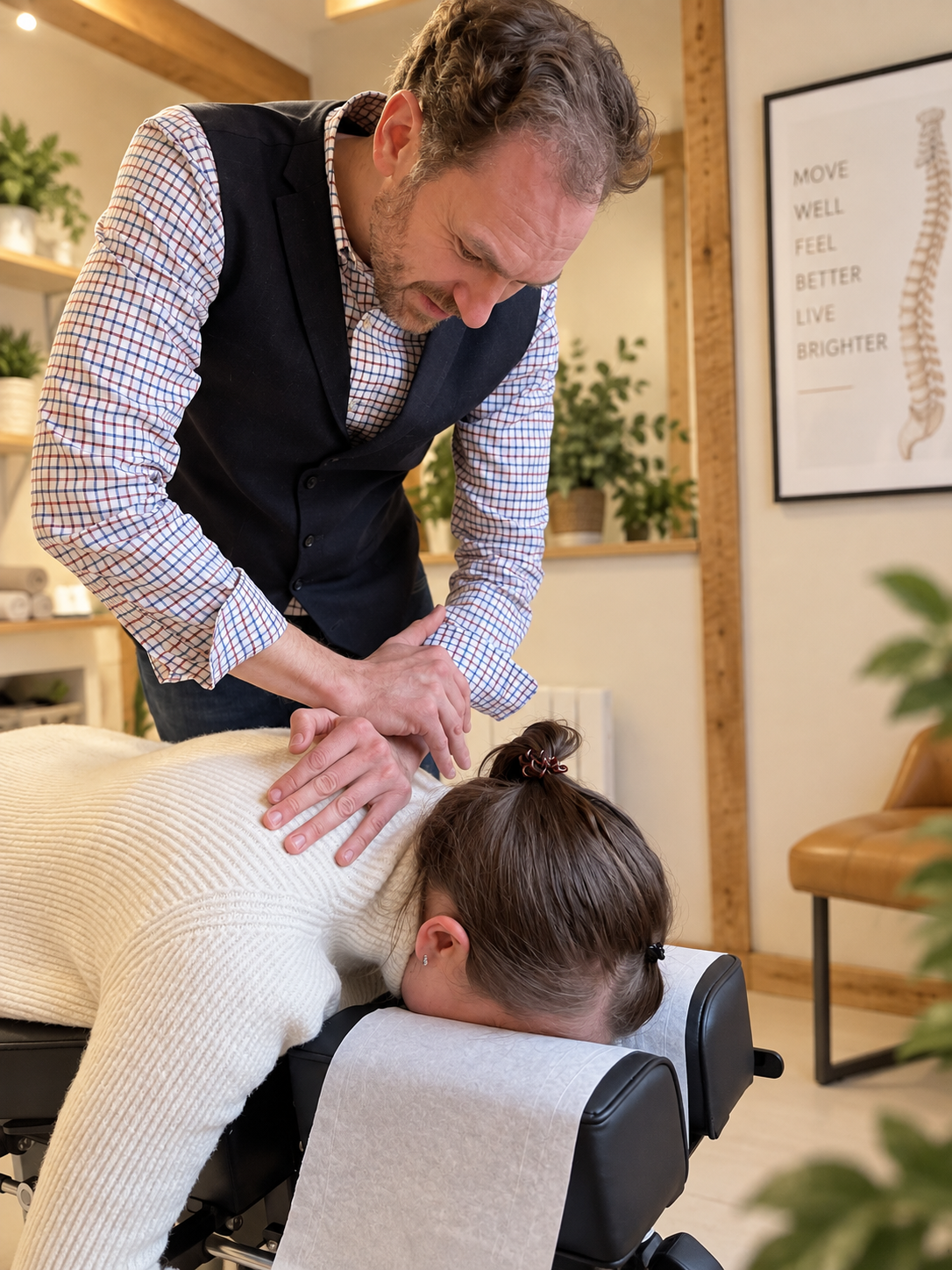
Chiropractic care focuses on improving joint mobility and reducing tension within the spine.
When spinal stress is reduced, many people notice:
Less tightness
Fewer headaches
Better overall resilience
Not just physically — but mentally too ✨
🌱 4. Support recovery
Prioritising sleep, hydration, and small breaks during the day gives your nervous system space to reset.
When Should You Seek Support? 🕊️
You may want help if:
✔ Neck or shoulder tension feels constant
✔ Headaches are becoming more frequent
✔ Stress seems to trigger physical flare-ups
✔ You feel physically drained or tense most days
These aren’t things you have to simply accept as part of a “busy season.”
Final Thoughts 💛
Stress is part of life — especially at this time of year.
But constant tension, headaches, and tightness don’t have to be your normal.
Often, your body is simply asking for support.
With the right care, small adjustments, and a little awareness, it’s possible to feel calmer, looser, and more resilient — even in the busiest months.
Here’s to feeling lighter as the year winds down 🙌 — from The Chiropractic Hub